Blue Hole IV was born from a phrase in Richard Sennett’s The Craftsman, where he states “The fundamental fact of life is that nothing lasts—yet.. we need something to orient us, to lift us above the confusions of the moment.” I began thinking of the way in which we orient ourselves to the world. The spatial level that orients my experience is, for instance, a certain way that my body takes up the world, a “gearing of the subject into his world,” as Merlau-Ponty puts it. He argues that depth is the only dimension that belongs clearly to our perspective and not to things. Depth is the dimension of space (more than height and breadth) that requires us to suspend our assumptions. We experience depth at the ‘crossing’ or ‘collision’ of body and world. Accordingly, we do not construct space without an instrument for measuring it, and the instrument to which we refer everything, which we use instinctively, is our own body. In all the different ways of perceiving space, I am able to gain knowledge of others and myself in the world. The significance of everything that determines space (up, down, now, far) is based on here. Think of giving directions: you are here… you must move this way to reach “there,” or a new here. In order to orient yourself to a point, you must first have a point of orientation. In order to experience disorientation, you must have a loss or a slip of an existing point to be oriented from. The body consistently searches for an optimal way to gear itself, to orient itself within the world. In my blue hole series, I began searching for a way to create this slip, or search for orientation in the viewer. The blue hole in the floor acts as a precipice: an object which one must orient itself to, but also one that presents the danger of disorientation. The strobe lights and the fluorescent, glowing resin create a distance between immediately perceivable space and the dimension of depth within space that entirely disorients the viewer. Keeping a gearing of the body to space at bay, it disallows orientation and makes the experience one related keenly to the body.
Showing posts with label chloe rager. Show all posts
Thursday, December 10, 2015
Thursday, November 12, 2015
News on DiMoDa Museum
http://transfergallery.com/2015/09/dimoda-a-virtual-institution/
http://thecreatorsproject.vice.com/blog/dimoda-is-a-digital-museum-of-digital-art
Wednesday, November 4, 2015
Final Documentation & Reflection For Process Project
The Art of the Project: Reflection
The audience kneels or bends. The room is silent as they pay respect to the objects, contemplating their contents as they try to puzzle together what they all might mean. Each person has a story they want to tell about the person they feel is represented. The small vials are medical, but also memorial; they present as both a scientific sample and as part of a memory. Some vials are filled to the brim while others have only an iota of substance in them. This variation in the fill lines implies that what exists in the vial is all that could be preserved. A few of the audience members read it as a chronological narrative- from left to right; others read it as non-sequential and see this as amplifying the investigation required on part of the viewer. The gold leaf and marble shelf, reminiscent of a mausoleum, merge with the repetition of the vials and small black caps to blend science and religion. Audience members mentioned that the vials seemed to appear in categories: grief (tears, funeral brochure, memorial flowers), belongings/ the body (perfume, hair, blood, fuzz from a relic), and actions (burnt brillo, motor oil, melted coke bag). This being said, it didn’t appear that a discernible statement was being made although the process was evident. This rings true with where I stand on the process/ sculpture. Some of the strengths that were mentioned were the sculptures ability to relay memory, the placement on the wall, the presentation, and the the labeling of the vials. In the future, though I like the pencil on the wall, I would like to present the sculpture with toe tags as labels instead. An interesting moment in critique, for me, was the discussion of the term “candy coating.” As it is both an idiom and an object, it becomes both metaphor and reality. I like this because I had applied the phrase “not candy coating it” to the materials I chose to present (i.e. melted coke bag, medical paraphernalia, etc.). Altogether, I feel that the sculpture turned out to be a successful material manifestation of both my sister and the process of my particular form of grief. Death is something that I carry with me; though it may not be at the forefront of my thoughts, it is always lurking closely nearby. That being said, finally getting a chance to make a sculpture dealing directly with my sister’s death feels exactly as her death has been: bittersweet.
Tuesday, October 27, 2015
Process Shots
Completed vials & a shot of my workspace on a night of process (working in blue light):
Melting the gram bag:
Blood, insulin, lancet, & sterile alcohol
Process Work
Pressing flowers given to me on the date of my sister's birthday:
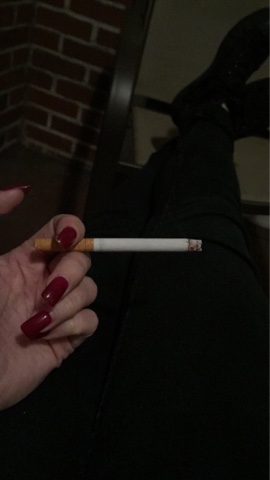
Smoking one of her brand of cigarettes:
Pulling 10 units of insulin:
Monday, October 5, 2015
Monday, September 28, 2015
Anish Kapoor Sculpture Vandalism Censored in Gold
http://thecreatorsproject.vice.com/blog/anish-kapoor-sculpture-censored-in-gold
http://www.theguardian.com/world/2015/sep/07/anish-kapoor-queens-vagina-sculpture-at-versailles-vandalised-again
Wednesday, September 16, 2015
Martin Roth Installation
http://thecreatorsproject.vice.com/blog/artist-fills-gallery-with-rescued-animals-and-debris-from-syria
Subscribe to:
Posts (Atom)